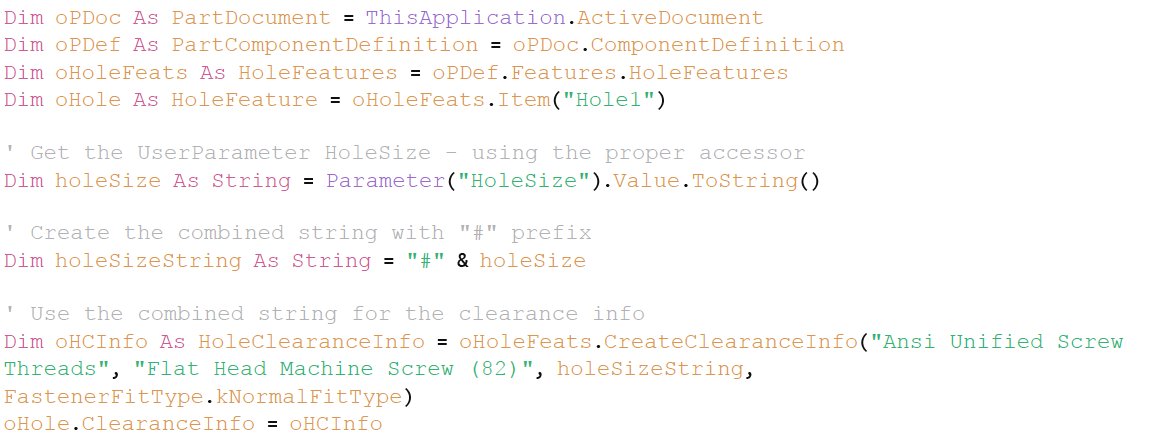

In today's competitive manufacturing landscape, design efficiency can make or break a company's ability to innovate quickly. One of the most promising areas for improvement is automating CAD processes for product families that share similar characteristics. By leveraging similarities across designs, companies can dramatically reduce design time while maintaining quality and consistency.
When your product catalog contains items with similar features—whether they're different sizes of the same valve, variations of a furniture line, or customized versions of a standard machine part—manual redesign of each variant is inefficient. Engineers often spend hours making predictable adjustments to existing designs, time that could be better spent on innovation.
CAD automation allows design teams to:
- Reduce repetitive design tasks
- Ensure consistency across product variants
- Respond faster to customer requirements
- Free up engineering resources for higher-value activities
Real-World Example
A manufacturer of industrial pumps implemented CAD automation for their centrifugal pump line, which included hundreds of variants based on flow rate, pressure, and fluid properties. By creating an intelligent modeling system that captured design relationships, they reduced design time for new pump variants from 40 hours to just 2 hours, while also reducing design errors by 85%.
Challenges to Consider
Successful CAD automation isn't without hurdles:
- Initial setup requires significant investment in modeling and knowledge capture
- Complex design rules need ongoing maintenance
- User training and change management are critical
- Balance between automation and flexibility must be carefully managed
For companies with product lines sharing similar characteristics, CAD automation represents a strategic opportunity to enhance competitiveness. While the upfront investment may seem substantial, the long-term benefits in design efficiency, consistency, and responsiveness to market demands can deliver significant returns. As design automation technologies continue to mature, companies that fail to leverage these capabilities risk falling behind competitors who can bring high-quality variants to market more quickly and at lower engineering cost.
Accelerating CAD Automation with Expert Implementation
While the benefits of CAD automation for similar product families are substantial, the implementation process can be time-consuming and resource-intensive. This transition period—where companies must continue regular operations while developing automation systems—often becomes a critical bottleneck in realizing efficiency gains.
Shortening this implementation timeline is paramount for achieving faster ROI and competitive advantage. ProEng specializes in expediting CAD automation implementation through their proven methodology and deep industry expertise. With experience across multiple industries and product types, ProEng's specialists can rapidly identify automation opportunities, develop tailored parametric systems, and train your team for seamless adoption.
By partnering with CAD automation experts like ProEng, companies can reduce implementation time by up to 60% compared to in-house development, while ensuring more robust systems and comprehensive knowledge transfer. This accelerated path to automation means capturing efficiency benefits sooner while minimizing disruption to ongoing engineering operations.
For businesses serious about transforming their design processes, working with implementation specialists isn't just a convenience—it's a strategic advantage that can dramatically compress the time between concept and competitive capability.